Sound dampening can be unsettling, often making you feel separated from the world around you. Many people immediately fear they’re experiencing permanent hearing loss when, in reality, the culprit may be something much simpler: cerumen accumulation.
Recognizing how to identify these differences ensures you seek the correct treatment, whether that is professional cerumen extraction or a clinical hearing test. In the event you are experiencing muffled hearing, remain calm. A clinical assessment will provide the final answer, but the following guide details the main differences between wax-related issues and permanent loss.
How to Identify a Wax Blockage
Earwax is actually a beneficial, natural secretion designed to shield the ear canal from dust and external debris. Issues occur when excessive wax builds up or becomes clogged.
Typical indicators of an obstruction involve:
- A significant decrease in hearing level
- The sense that there is a mechanical obstruction in the ear
- Canal irritation or slight pain
- Buzzing in the ear (ringing)
- Instances of clearer hearing after a jaw stretch or eating
Because blockages are tangible, they frequently impact just a single ear at a time rather than both equally. Luckily, once surplus wax is professionally removed, hearing often reverts to baseline right away.
What Hearing Loss Feels Like
Hearing loss, especially age-related or trauma-based hearing loss, has a tendency to develop gradually and doesn’t improve when the ear is cleared.
Indications of permanent hearing loss often feature:
- Issues with speech intelligibility in crowded or noisy locations
- Regularly requiring clarification during normal conversation
- Setting electronic device levels to a point that people find uncomfortable
- Reduced sensitivity to higher-pitched auditory signals
- A balanced reduction in auditory function in both ears
Importantly, auditory loss is an intelligibility concern that seldom includes the sense of manual pressure found with wax.
Contrasting Cerumen Blockage and Hearing Loss
While evaluating cerumen impaction vs. hearing loss, a few clues can help guide you in the right direction:
- Timing: Earwax issues often come on suddenly; hearing loss progresses slowly
- Sustainability: Obstructions are a fast fix, while sensorineural loss requires ongoing management
- Symptoms: Fullness and discomfort indicate wax; speech clarity issues indicate impairment
- Ear Balance: One-sided muffled sound suggests cerumen, while bilateral suggests hearing loss
The Risks of DIY Ear Cleaning
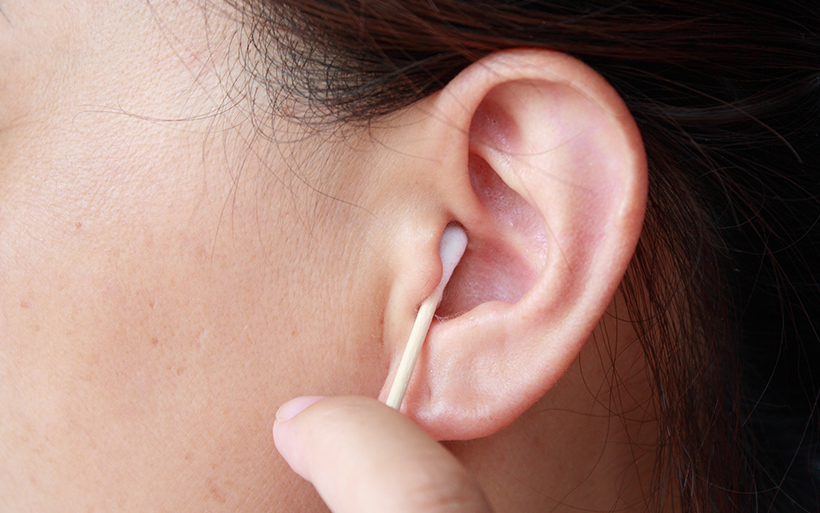
Numerous people make the mistake of attempting to extract a perceived blockage manually using swabs or household tools. Unfortunately, these can shove wax deeper and exacerbate the situation.
Medical specialists caution that putting anything smaller than your elbow in your ear can lead to eardrum rupture and major clogging.
In the same way, neglecting initial auditory decline can postpone care that assists in preserving communication, safety, and quality of life.
What to Anticipate During a Formal Consultation
A brief ear exam can instantly verify whether earwax is blocking the canal.
If an obstruction is found, a clinician can clear it carefully, often returning your auditory function instantly.
Should the auditory canal be unobstructed but hearing difficulties persist, an audiogram can assess if hearing loss is identifiable and determine its type and severity.
The NIDCD recommends prompt assessment whenever shifts in auditory function conflict with your everyday routine.
Finding the Correct Path for Improved Hearing
Dampened sound is not a certain sign of long-term loss.
Frequently, the problem is simply an accumulation of cerumen that can be easily cleared.
Obtaining expert attention ensures you find the exact cause and the right solution for your hearing requirements.
Keep in mind that self-diagnosis is hardly a substitute for a professional exam when it pertains to your auditory health.
Addressing the issue immediately halts the anxiety of the uncertainty and puts you on the track to better hearing.
Rather than guessing what is wrong, book a rapid check-up with our audiologists to uncover the reality.
