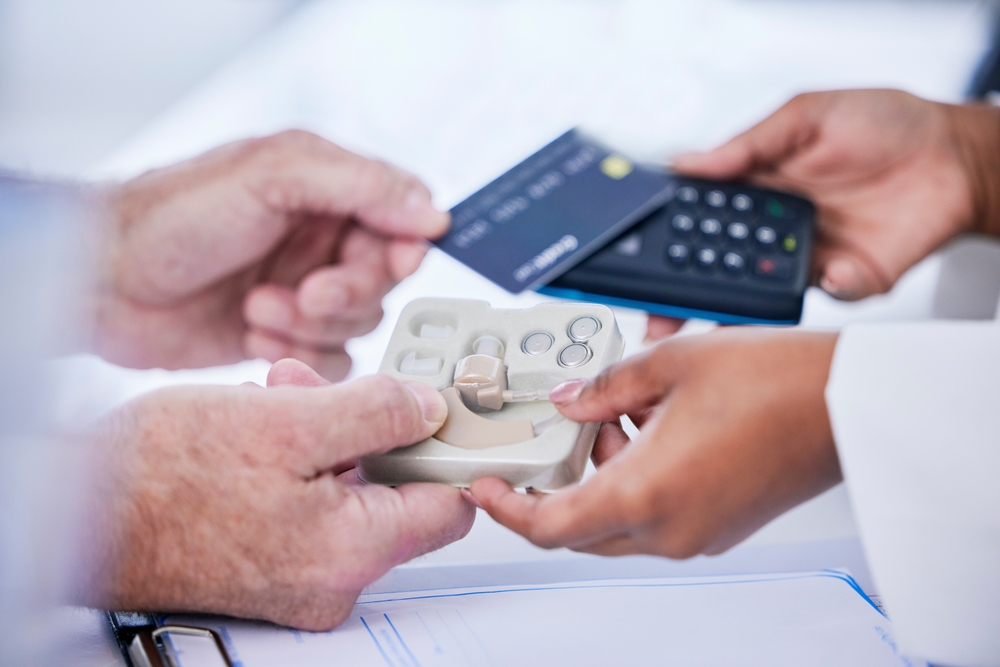
When exploring treatment options for age-related hearing loss or presbycusis, the initial clinical cost of amplification devices can be striking. Based on the sophistication of the digital signal processing and the required audiometric programming, these devices span a wide pricing spectrum. For many people, that comes as a surprise, and it can understandably feel like a stopping point.
The sticker price is a real metric, yet it rarely reflects the actual net expenditure for the patient. A high percentage of candidates remain unaware that retail pricing is seldom the final out-of-pocket obligation. Between insurance, pre-tax accounts, and financing options, there are multiple ways to reduce or spread out the cost.
This clinical brief outlines primary procurement strategies to educate you prior to your diagnostic evaluation, ensuring a confident approach to auditory rehabilitation.
Maximizing Private and Employer Insurance Benefits for Acoustic Devices
Before assuming you’ll be paying completely out of pocket, start with your insurance.
Under private healthcare frameworks, the scope of coverage for speech-preservation technology is subject to extreme variation. Certain contracts provide percentage-based co-insurance, whereas alternative policies offer a rigid monetary stipend. In contrast, certain insurance products offer zero provision for auditory assistive devices. To clarify your position, review your summary of benefits or contact the carrier regarding otolaryngological provisions. Ensure you document any maximum limits, whether diagnostic programming sessions are bundled, and which audiology practices hold in-network status.
For beneficiaries enrolled in federal programs, note that Original Medicare (Parts A and B) excludes coverage for routine hearing aids. Fortunately, choice Medicare Part C programs fill this gap by providing an annual allowance or discounted device network.
For those on Medicaid, coverage depends on where you live. Some programs provide hearing aid benefits for qualifying adults, so it’s worth checking or asking your provider for guidance.
Tax-Advantaged Financing: Utilizing HSA and FSA Funds for Hearing Care
If you have a Health Savings Account (HSA) or Flexible Spending Account (FSA), you already have a powerful tool to help pay for hearing aids.
Because the IRS classifies hearing aids as a qualified medical expense, you can deploy pre-tax assets for their purchase. Utilizing this financial pathway yields substantial savings that alter the economic equation. To illustrate, a patient in the 22% federal tax tier purchasing a $2,000 system reduces their real economic impact to approximately $1,560. While HSA vehicles allow long-term capital accumulation, standard corporate FSAs enforce a rigid use-it-or-lose-it clause each calendar cycle. That means it’s especially important to use those funds before they’re lost! Both custom-programmed medical devices and eligible over-the-counter options are valid selections, making a baseline balance check highly prudent.
Structured Payment Plans and Credit Options for Modern Hearing Aids
Many hearing care practices offer hearing aid financing options that allow you to spread payments over time instead of paying everything up front. Such specialized medical credit instruments, including CareCredit, commonly offer deferred-interest terms for designated durations. This arrangement protects the patient from selecting sub-optimal technology merely to meet an immediate budget limit.
Integrating payment plans into your treatment discussion is a routine and professional practice. If you’re concerned about cost, mention it during your doctor’s visit. Keep in mind that these diverse consumer pathways were developed to address these precise medical realities! The medical community firmly believes that securing vital sensory rehabilitation should never require severe financial disruption.
Maximizing VA Healthcare Services for Service-Connected Hearing Deficits
With hearing deficits ranking as a primary consequence of military service, the VA delivers comprehensive support mechanisms for veterans.
Qualified service members are frequently entitled to premium, custom-fitted hearing systems at zero cost via VA medical channels. Regardless of whether your auditory deficit is directly tied to your service record, your general enrollment status can open these pathways. If you have not yet audited your federal benefits, contacting a regional VA officer or requesting help from your clinic is a valuable next step.
Civic and Non-Governmental Resources for Affording Hearing Technology
Nonprofit and community-based programs can help make hearing aids more affordable. Organizations like the Starkey Hearing Foundation and Lions Club International offer assistance to qualifying individuals. Furthermore, a number of municipal and state agencies sponsor dedicated initiatives for economically disadvantaged adults.
While these philanthropic avenues often mandate strict income verification and involve operational backlogs, they remain excellent resources. Most of these foundations provide digital portals to screen your eligibility or initiate the formal intake procedure.
OTC Hearing Aids: Are They a Cheaper Alternative?
The OTC retail segment offers a highly economical alternative, with average pair pricing falling between several hundred and one thousand dollars. Such devices are clinically appropriate for mild or early-stage moderate presbycusis in self-directed adult users.
Yet, without the intervention of an expert to customize the acoustic programming, many users fail to achieve adequate speech intelligibility. For individuals demonstrating pronounced or complex sensory deficits, physician-fitted clinical devices consistently yield superior acoustic gain stability.
Rather than purchasing an OTC model out of economic necessity, investing in a professional evaluation establishes your true baseline needs. OTC hearing aids are usually a good option for someone waiting for their fitted hearing aid or for a response on whether they qualify for certain programs or benefits. While superior to untreated deficits, these entry-level systems are rarely sustainable long-term answers for progressive presbycusis.
Developing Your Customized Financial Strategy for Better Hearing
We help our patients navigate hearing aid costs every day. The clinical landscape contains significantly more financial assistance routes than general consumer awareness suggests.
By providing your current insurance documentation at check-in, our specialists can cross-reference your network benefits and construct a tailored payment solution. Phone our office location today to secure a consultation slot or coordinate your evaluation via our website. We look forward to delivering the accurate answers and balanced payment options necessary to restore your connection to the world.
